

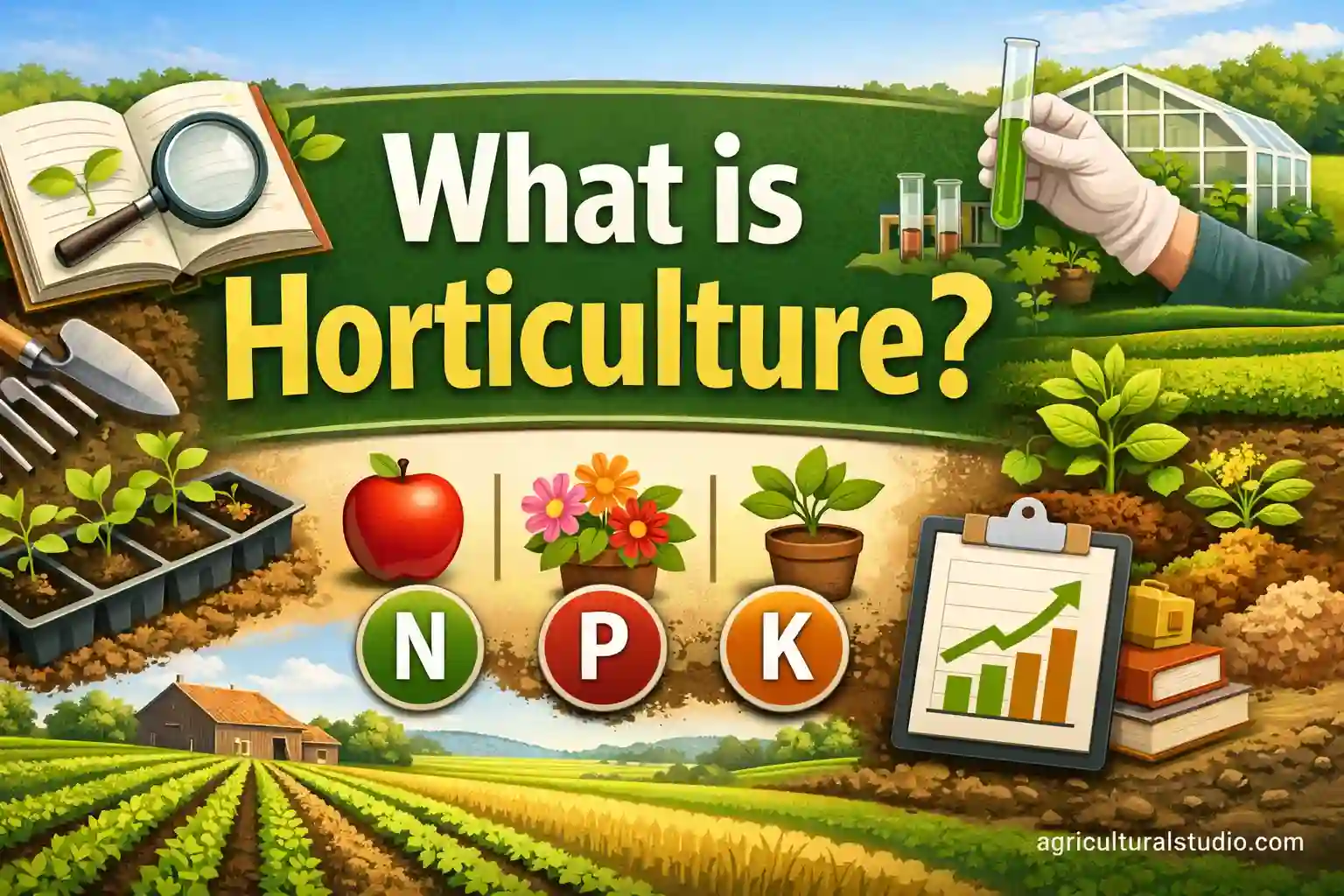
When we talk about agriculture, most people think only about food crops like wheat and rice. What is horticulture? It is the branch of agriculture that deals with fruits, vegetables, flowers, spices, and medicinal plants.
The branch of agriculture that deals mainly with these crops is called horticulture.
Horticulture is not just about growing plants. It is also about how we use them for food, beauty, health, and income. In India, horticulture plays a big role in farmers’ income because crops like mango, banana, tomato, onion, flowers, and spices give better profit compared to many field crops.
Table of Contents
This topic is part of our Horticulture Notes series for agriculture students.
What is horticulture?
Origin of the Term “Horticulture”
The word horticulture comes from two Latin words:
- Hortus = garden plant
- Cultura = cultivation
So, horticulture simply means cultivation of garden plants.
The term “horticulture” started being used in the 17th century. Before that, plants were grown, but the subject was not clearly separated from general agriculture.
Important Historical Points
- Father of Horticulture: Thomas Andrew Knight. He did important work in plant breeding and fruit crops.
- First book on horticulture in India: “Fruit Growing in India” by H. B. Hayes (1945)
- The first horticulture book in India was written on the litchi crop, showing how important fruit crops were even in early times.
Definition of Horticulture
Horticulture is the branch of agriculture that deals with growing and using fruits, vegetables, flowers, and other useful plants.
It includes:
- Growing plants
- Improving quality
- Harvesting
- Processing and preservation
- Beautification and landscaping
Branches of Horticulture
Horticulture is divided into different branches based on the type of plants and their use.
- Pomology
- Olericulture
- Floriculture
- Arboriculture
- Plantation crops
- Spices and Condiments
- Medicinal & Aromatic plants
- Fruit Technology
- Landscape Gardening
1. Pomology (Study of Fruits)
Pomology is derived from both greek and Latin words.
- Pomum (Latin) = fruit
- Logos (Greek) = study
So, pomology means the study and cultivation of fruit crops.
2. Olericulture (Cultivation of Vegetables)
Olericulture derived from Latin words
- Oleris = pot herb
- Cultura = cultivation
So, olericulture means cultivation of vegetables.
What are vegetables?
Vegetables are usually Soft (herbaceous) plants and used mainly after cooking
Examples: Potato, tomato, brinjal, cabbage, cauliflower, okra, spinach
3. Floriculture (Cultivation of Flowers)
Floriculture word derived from Latin words
- Florus = flower
- Cultura = cultivation
So, floriculture means growing flower crops.
Flowers are grown for Decoration, Worship, Festivals, Cut flowers, Garlands
Floriculture has two parts:
(a) Commercial Floriculture
This means growing flowers for sale and profit.
Examples: Rose, Jasmine, Carnation, Aster, Marigold
These flowers are sold in markets, temples, and for functions.
(b) Ornamental Floriculture
This means growing flowers for beauty and pleasure, not mainly for selling.
Examples: Dahlia, Zinnia, Cosmos, Hibiscus, Balsam, Nerium, Poinsettia, Hollyhock, Gerbera, Gaillardia
These plants are used in home gardens, Parks, School gardens, Roadside gardens.
4. Arboriculture (Trees for Shade and Beauty)
Arboriculture means growing perennial trees for shade, avenue, and decoration.
These trees are not mainly for fruits
Examples: Polyalthia, Spathodea, Cassia, Gulmohar
5. Plantation Crops
Plantation crops are those Grown on a large scale, their products are used after processing
Examples: Tea, Coffee, Rubber, Coconut, Cocoa
6. Spices and Condiments
These plants are used to improve taste and smell of food.
✓Spices
Spices add aroma and flavour.
Examples: Pepper, Ginger, Red chillies, Onion, Garlic, Cardamom, Clove, Cinnamon
✓Condiments
Condiments mainly add taste.
Examples: Turmeric, Ginger, Red chillies, Onion, Garlic
These crops are small in quantity But very valuable and Used daily in Indian cooking.
7. Medicinal and Aromatic Plants
These plants are very important for health and industry.
✓Medicinal Plants
These plants are used to prepare medicines.
Examples: Periwinkle, Opium, Mentha, Cinchona, Dioscorea (yam), Belladonna, Senna, Sarpagandha, Ashwagandha, Tulsi
Used in Ayurveda, Allopathy, Pharmaceutical industry.
✓Aromatic Plants
These plants give essential oils with fragrance.
Examples: Lemongrass, Citronella, Palmarosa, Vetiver, Geranium, Davanam, Lavender
Used in Perfumes, Soaps, Cosmetics, Medicines
8. Fruit Technology
Fruit technology deals with Processing, Preservation, Storage.
Examples:
✓Making jam from mango
✓Making juice from orange
✓Drying grapes into raisins
9. Landscape Gardening
Landscape gardening means: Planning and developing gardens and parks.
It includes Design, Plant selection, Pathways, Lawns, Water features
Used in Public parks, Hotels, College campus, Tourist places.
Importance of Horticulture
Horticulture is not only about growing fruits, vegetables, and flowers. It plays an important role in food security, farmer income, human health, and the environment. In a country like India, where most people depend on farming, horticulture has become one of the most useful branches of agriculture. Let us understand its importance in simple and practical terms.
1. Provides Nutritious Food
Horticultural crops are rich sources of vitamins, minerals, and fibre. Fruits like mango, banana, and orange give energy and vitamin C. Vegetables like spinach, carrot, and tomato supply iron and vitamin A. Without these crops, our daily diet would be incomplete.
2. Increases Farmers’ Income
Horticulture crops usually give higher profit than many field crops. Fruits, vegetables, and flowers can be sold at good prices if managed properly. Crops like tomato, onion, chilli, banana, and marigold mature quickly and give returns within a short time.
3. Creates More Employment
Horticulture needs more care and labour than cereal crops. Activities like planting, weeding, harvesting, grading, packing, and marketing provide work to many people. Women also get good employment in vegetable and flower farms.
4. Supports Food Processing Industry
Many horticultural crops are used for making processed products. Mango is made into pulp and pickles. Tomato is used for sauce and ketchup. Chillies and turmeric are dried and powdered. This processing increases the value of the produce.
5. Improves Export Earnings
Horticulture crops like spices, tea, coffee, fruits, and flowers are exported to other countries. Indian spices such as pepper, cardamom, and chilli are famous all over the world. Cut flowers are exported from cities like Bengaluru and Pune.
6. Uses Land More Efficiently
Horticulture crops can be grown on small pieces of land and even in home gardens. Crops like vegetables and flowers can be grown in beds, pots, and polyhouses. This helps farmers make better use of their land.
7. Improves Soil and Environment
Some horticultural plants help in protecting soil from erosion. Orchards and gardens cover the soil and reduce the effect of wind and rain. Trees planted along roads and canals also help in reducing dust and pollution.
8. Provides Medicinal and Aromatic Products
Many horticultural plants are used in making medicines. Plants like tulsi, ashwagandha, sarpagandha, and senna are used in Ayurveda and modern medicine. Aromatic plants like lemongrass and vetiver are used to make oils for perfumes and soaps.
9. Encourages Women and Small Farmers
Horticulture is suitable for small farmers because it does not always need large land areas. Kitchen gardens, nursery raising, and flower cultivation can be managed by families with limited land.
10. Adds Beauty and Mental Relaxation
Flowers, lawns, and gardens make our surroundings beautiful. Public parks, school gardens, and home gardens create a pleasant environment. Gardening also reduces stress and gives mental peace.
Scope of Horticulture
- Higher income for farmers: Fruit, vegetable, and flower crops give better profit than many field crops.
- Employment opportunities: Work is available in nurseries, orchards, vegetable farms, and flower production.
- Food and nutrition security: Supplies fruits and vegetables rich in vitamins and minerals.
- Export potential: Spices, fruits, tea, coffee, and flowers can be exported to earn foreign income.
- Processing industries: Scope in juice, jam, pickle, sauce, and dried product industries.
- Medicinal and aromatic plants: Growing demand for herbal medicine and essential oils.
- Urban and home gardening: Balcony gardens, kitchen gardens, and terrace farming are increasing.
- Research and education: Jobs in agricultural universities, research stations, and extension services.
- Landscape and nursery business: Parks, resorts, and housing societies need gardeners and plant suppliers.
- Self-employment: Nursery raising, mushroom cultivation, floriculture, and vegetable farming can start with small investment.
Conclusion
Horticulture is an important and practical branch of agriculture. It deals with fruits, vegetables, flowers, spices, plantation crops, and medicinal plants. Each branch has its own role in food, income, health, and beauty.
For Indian farmers:
- Fruits and vegetables give fast income
- Flowers give good profit
- Spices and medicinal plants have export value
For students:
- This topic is basic and scoring
- Important for BSc Agriculture and competitive exams
- Easy to remember if understood with examples
So, horticulture is not just about growing plants. It is about improving life through food, medicine, and beauty.

Leave a Reply